This week, I am continuing to prepare for the spring garden. It has been a cold week here in central Oklahoma and I managed to do some more planting on Saturday. By this I mean that I directly sowed the seeds in the ground without any protection. We have a lot of space outside, but little inside space. This week, I planted the following seeds: Morning Glory Blue Morning Glory mix White yarrow Yellow yarrow Purple coneflower White coneflower Snapdragons Lupine Russell Blue boy cornflower Mixed cornflower Lilac pompom poppy Hungarian poppy Foxglove Cup plant Liatris Maximilian sunflower Johnny jump up.
I have been researching what to plant and learned that some of the seeds that I have are invasive species. I have apple mint, which is invasive. I plan to grow this in my only large pot because I want it for making tea. I had previously planted vinca minor which is also invasive. Fortunately, it didn’t become invasive because it didn’t survive since I never watered it. I have dandelion seeds and these are quite aggressive spreaders. I want to try eating dandelion greens but feel it might be hard to control with the strong Oklahoma winds. However, Google says that dandelions don’t seriously harm the ecosystem so I may try a few seeds. I also have Chinese lantern seeds. These seem to be the most invasive and recommended for container planting in my area. I am not sure if I will plant the Chinese lantern this year because I don’t want to buy another large pot. I have already planted Red shiso in my garden and it will likely come up in spring. This is edible but invasive so I hope to pull it out early. I want plants that spread and fill out the huge space but I don’t want to cause unintentional harm to the environment by introducing plants that could crowd out the native species. I wish that nurseries wouldn’t sell these invasive plants or at least state that they are aggressive so that people can make informed purchases. True, I should have googled it before buying but it is a bit irresponsible of the sellers. I have two jobs so my time for controlling the spread of plants is limited. This is one of the reasons pumpkin vines overtook my garden last year. The other reason is that I had no idea how big pumpkin vines got as a beginner farmer. This year, the pumpkins will get their own patch away from other plants so they can sprawl out nicely.
I looked up the list of invasive plants for central Oklahoma but it was written with the scientific names. I used AI to give me the common names and will put it here for future reference: **Common Names of Invasive Plants of Central Oklahoma 1. **Ailanthus altissima (Mill.) Swingle:** * **Common Name:** Tree-of-heaven * Known for its rapid growth and ability to thrive in disturbed soils.2. **Albizia julibrissin Durazz.:** * **Common Name:** Mimosa, Silk Tree * A popular ornamental tree known for its delicate, feathery foliage and fragrant pink flowers.3. **Alternanthera philoxeroides (Mart.) Griseb.:** * **Common Name:** Alligator weed * An aggressive aquatic weed that can form dense mats on water surfaces.4. **Arundo donax L.:** * **Common Name:** Giant reed * A large, perennial grass often used for ornamental purposes or erosion control.5. **Bothriochloa bladhii (Retz.) S.T. Blake:** * **Common Name:** Brown top millet * A warm-season grass often used for forage or erosion control.6. **Broussonetia papyrifera (L.) L’Hér. ex Vent.:** * **Common Name:** Paper mulberry * * A fast-growing tree that can be used to make paper and other products.7. **Cyperus rotundus L.:** * **Common Name:** Purple nutsedge * * A persistent and invasive weed with triangular stems and small, tuber-like structures.8. **Eichhornia crassipes (Mart.) Solms:** * **Common Name:** Common water hyacinth * * A free-floating aquatic plant that can form dense mats on water surfaces.9. **Elaeagnus pungens Thunb.:** * **Common Name:** Silverberry * * A shrub with silvery leaves and fragrant flowers, often used for hedges or screens.10. **Elaeagnus umbellata Thunb.:** * **Common Name:** Autumn olive * * A shrub or small tree with silvery leaves and small, edible fruits.11. **Lonicera maackii (Rupr.) Herder:** * **Common Name:** Amur honeysuckle * * An invasive shrub that can form dense thickets.12. **Lythrum salicaria L.:** * **Common Name:** Purple loosestrife * * An invasive plant that can form dense stands along waterways.13. **Onopordum acanthium L.:** * **Common Name:** Scotch thistle * * A biennial plant with large, spiny leaves and purple flowers.14. **Perilla frutescens (L.) Britt.:** * **Common Name:** Perilla * * An annual herb with aromatic leaves, often used in Asian cuisine.15. **Potentilla recta L.:** * **Common Name:** Sulfur cinquefoil * * A perennial herb with bright yellow flowers.16. **Pueraria montana (Lour.) Merr.:** * **Common Name:** Kudzu * * A fast-growing, invasive vine that can cover large areas.17. **Pyrus calleryana Decne.:** * **Common Name:** Callery pear * * An ornamental tree known for its showy white flowers in the spring.18. **Saccharum ravennae (L.):** * **Common Name:** Ravenna grass * * A tall, ornamental grass with feathery plumes.
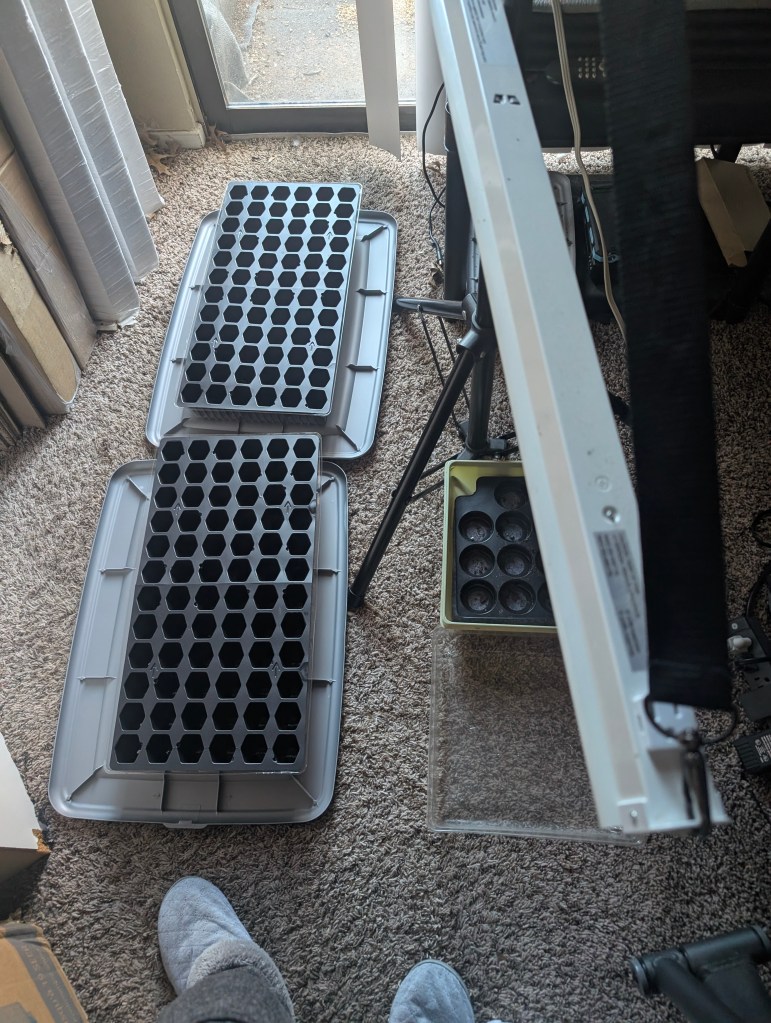
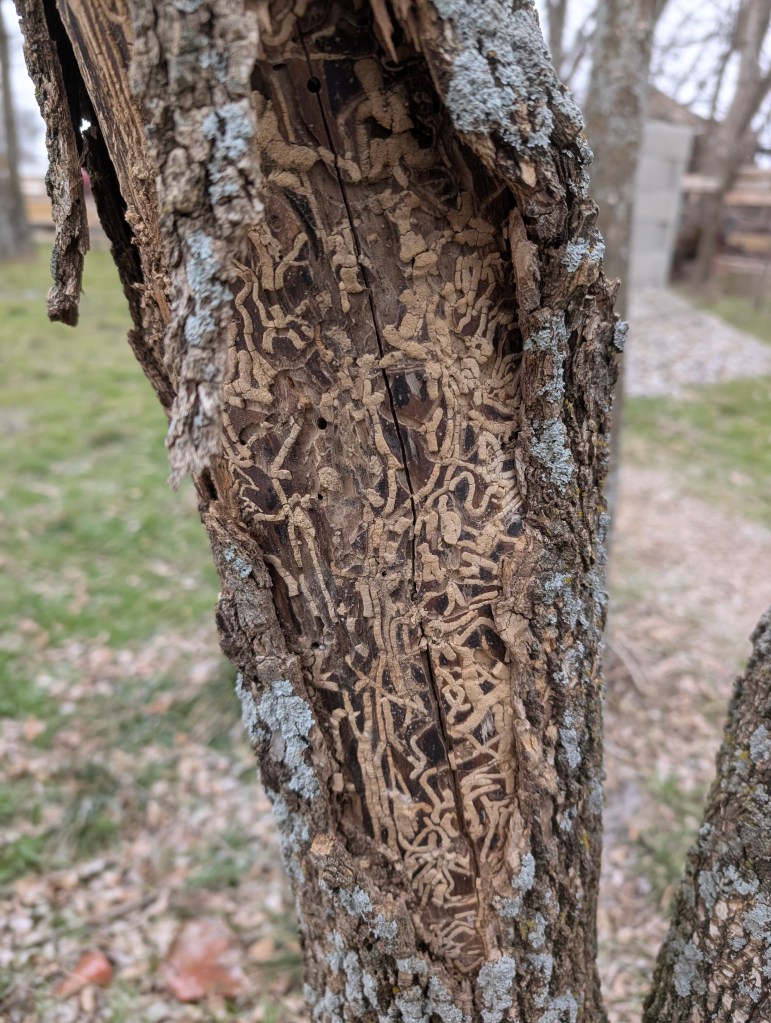
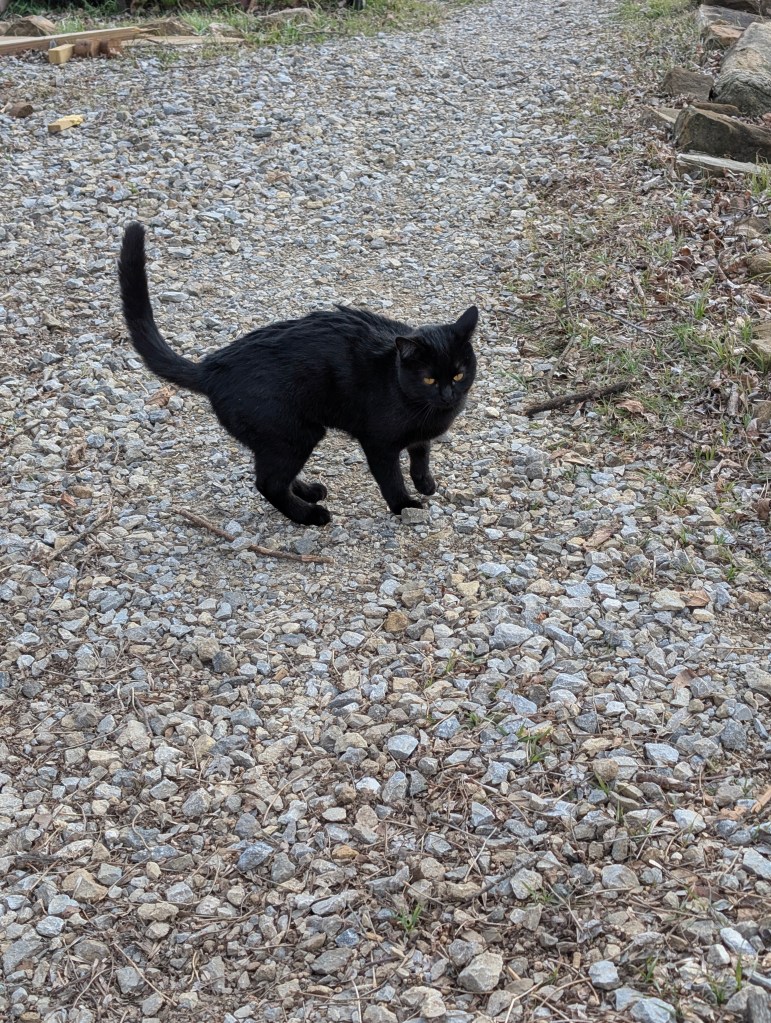
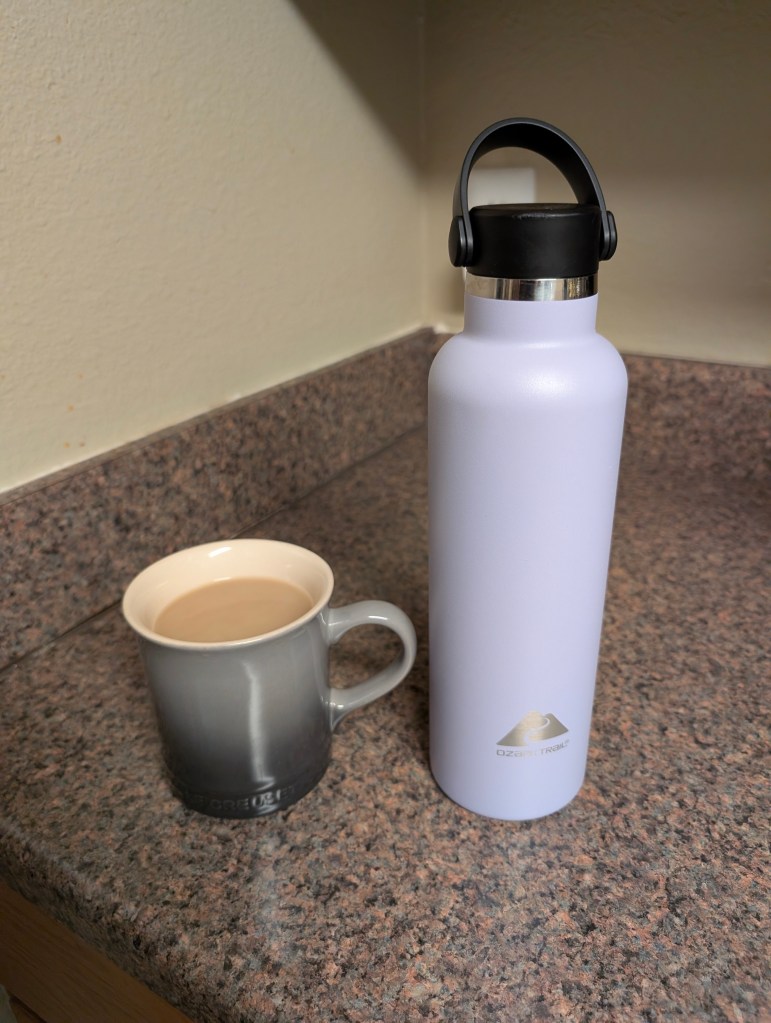
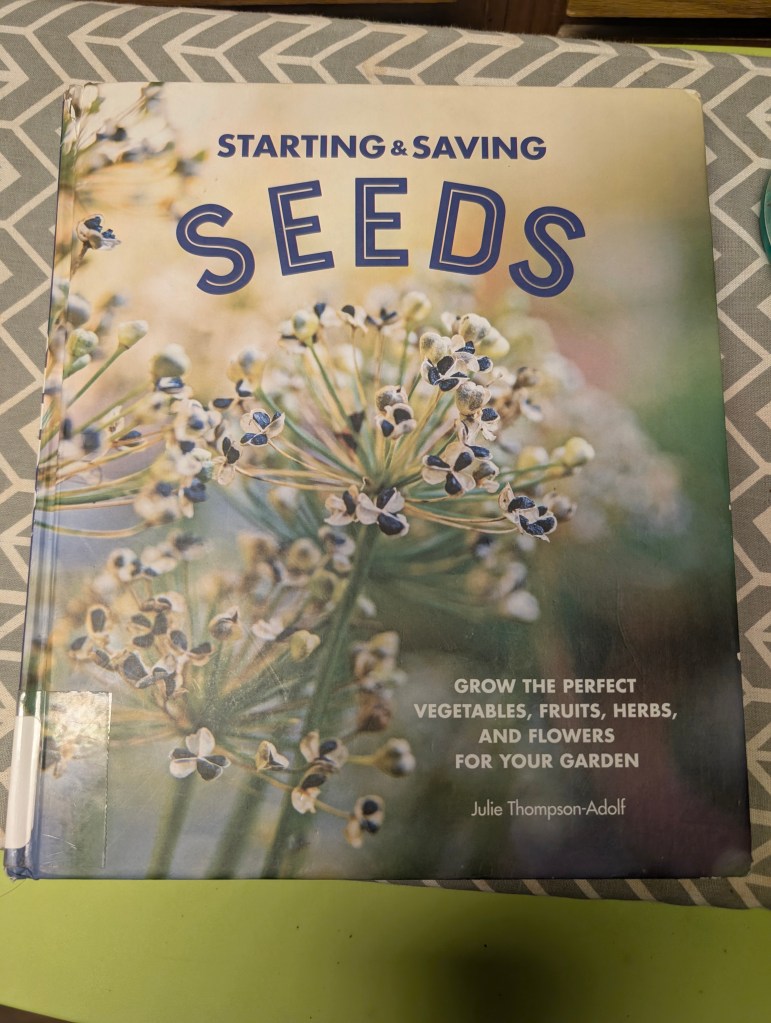
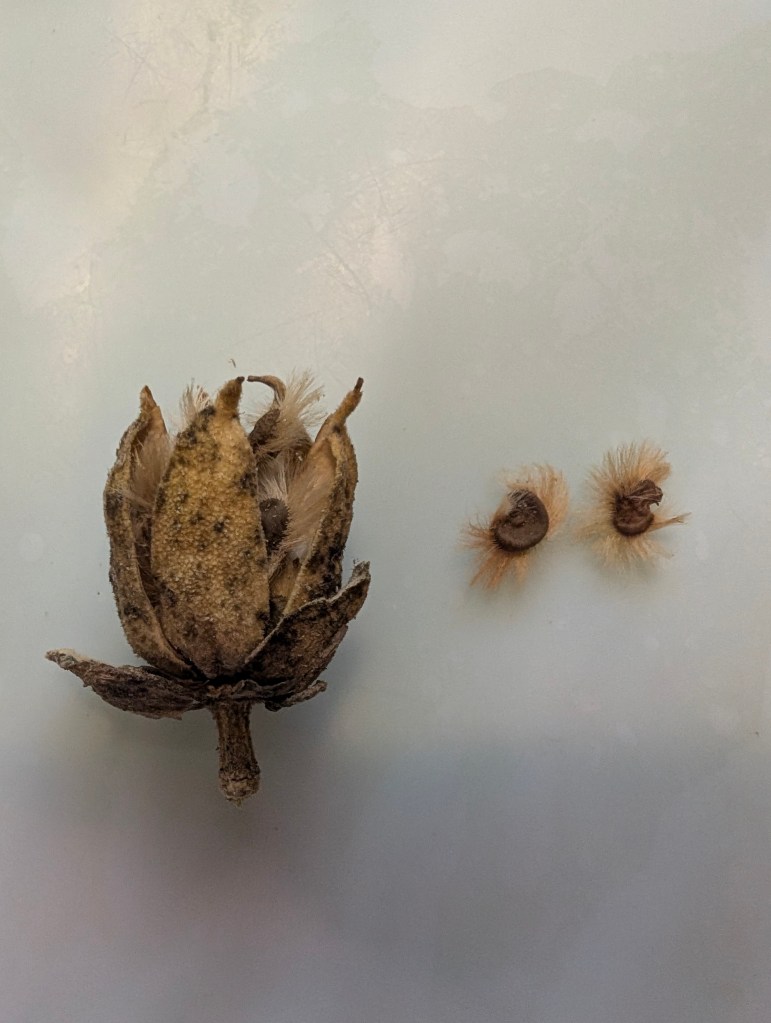
We have found preexisting invasive species too. We found Japanese honeysuckle and Easter red cedars growing in the pasture. Both of these are considered invasive species. The Eastern red cedar is particularly confusing as it is a native but also invasive. I read that it is usually managed with prescribed burning. We also noticed an invasive insect this weekend: the emerald ash borer. We didn’t see the insects but definitely can see the damage to the ash trees. Apparently, this a real problem and is killing millions of ash trees in America. I will do more research on this topic in the coming weeks. I am trying to plant lots of native species to support the wildlife in my area. My boyfriend brought me many seeds from his mom’s house this week, including vitex, sedum and rose of sharon. I have not prepared those seeds yet. We have a large butterfly population on the land, although there seemed to be fewer in 2024 than previous years. I am hoping to help support them and other pollinators since they are so important to our food supply. I have also seen many species of birds as well as many types of animals, including: coyote, skunk, opossum, rabbit, snake, turtle, and squirrel. I have been reading a book about seeds that I am really enjoying. I will put a picture below for reference. I tried a garden planning app called Planter this week as well. The plant options on the app are too limited and the space too small for my massive garden plans. I have also recently gotten a new mug and water bottle so I can attempt to reduce my microplastic intake. I am a big fan of the Le Creuset mugs my boyfriend gave me. They are really hard to break and hold the heat well. I found this water bottle on clearance at Walmart and I love the loop on the lid for easy carrying. I recently learned that tea bags contain lots of microplastics and I drink a lot of tea. So I am hoping to grow a nice tea garden this year to reduce that also. I have changed my seed starting plans a bit. I am planning to start the celery and cardoon next week, probably during my Lunar New Year holiday. The celery and cardoon will go outside in the square tray. I will begin the tomatoes and peppers around Valentine’s Day inside in the big trays. Happy year of the snake 🐍
 Lisa Ledbetter